Match has a business need to encourage members to subscribe. We are always looking for new ways to monetize the app in a way that feels meaningful. The ultimate goal is to find a balance between accomplishing business goals and providing a good user experience.
I started by taking a step back and brainstorming which user segment we wanted to zoom in on. After doing an audit of the app we found areas of opportunity for our free members. We had little initiatives to convert our free members.
I worked with our data team to get a better picture of our male and female free and standard users. I looked at how much of our monthly active users are free and standard members. Also the demographic of these users. Most of our free members a males, divorced between the ages of 40-50.
After looking a who our free members are, we turned to our customer satisfaction survey to see if we can gain some customer insight. We found that our users answered the number one reason why they subscribe is to see their likes and matches.
Also in the survey, we found that users have apprehension about purchasing a subscription becuase of the price. We
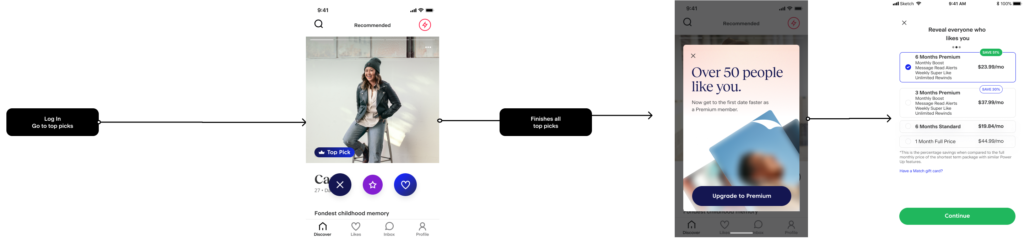
After brainstorming several ideas, we landed on surfacing how many likes people have in their discover stack. We talked to Dev about our ideas, this one seemed the best to implement given time and tech requirements.
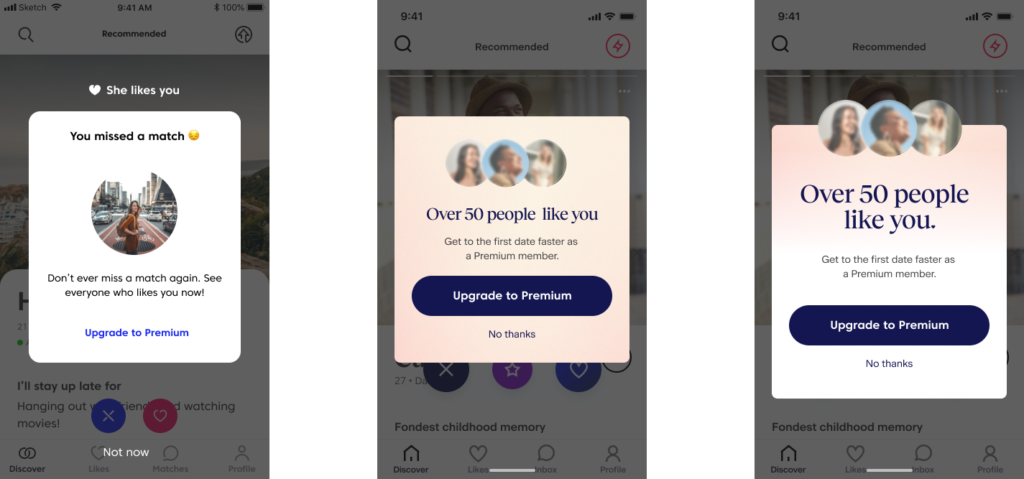
I began with wireframing some ideas to get the messaging right. When we decided what we wanted it to say, I made some quick mocks. We iterated on several options and brainstormed different touch points.
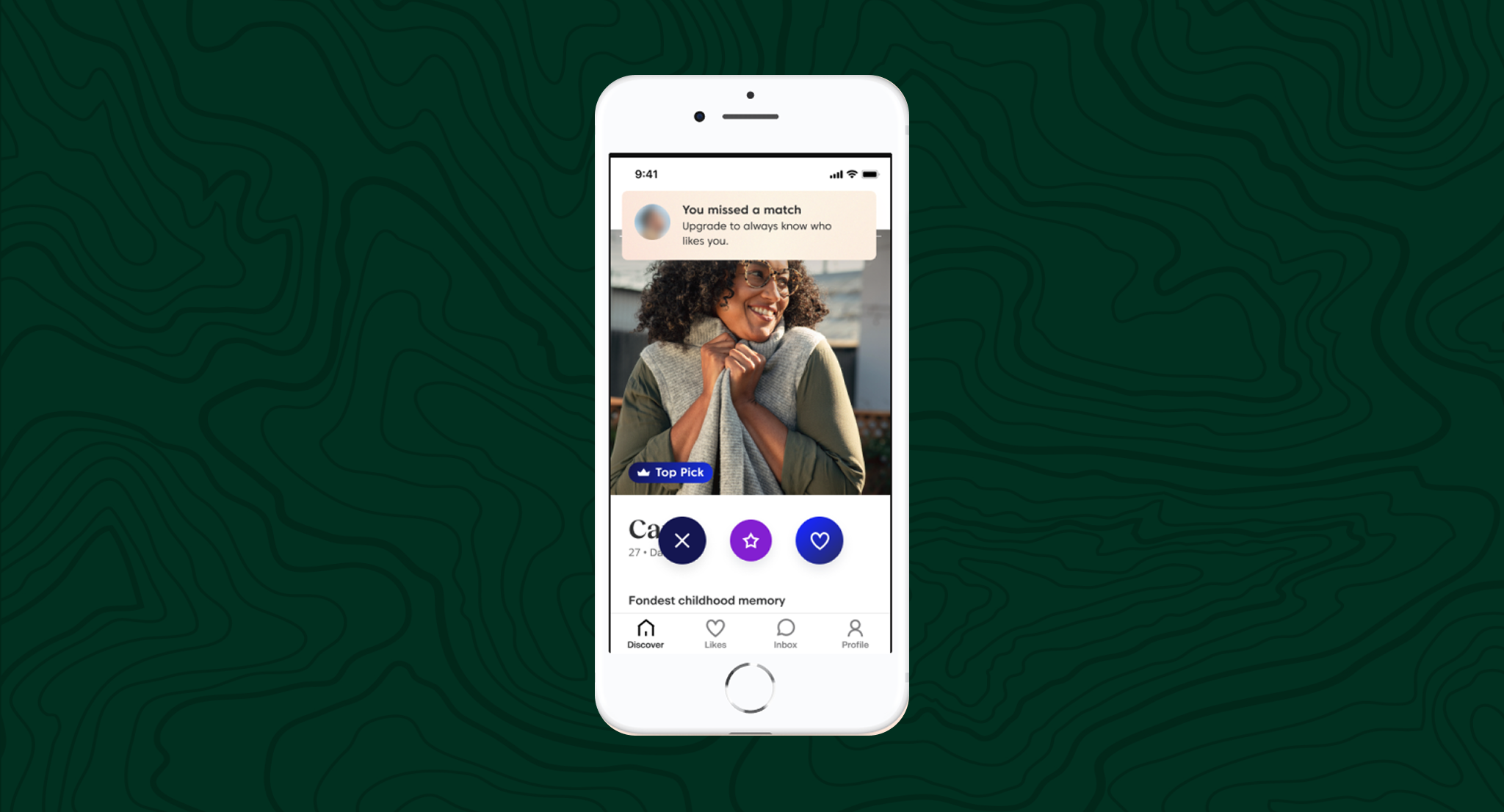
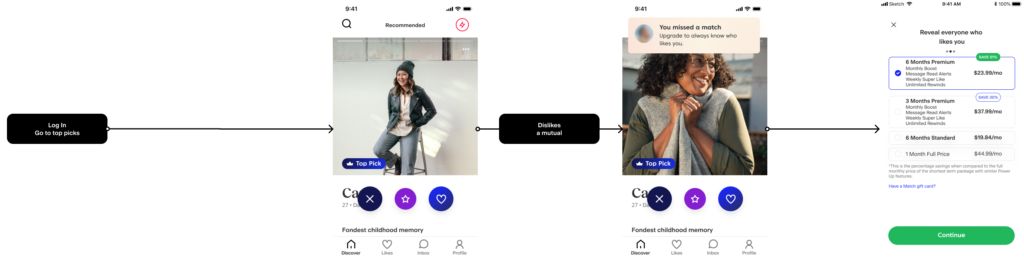
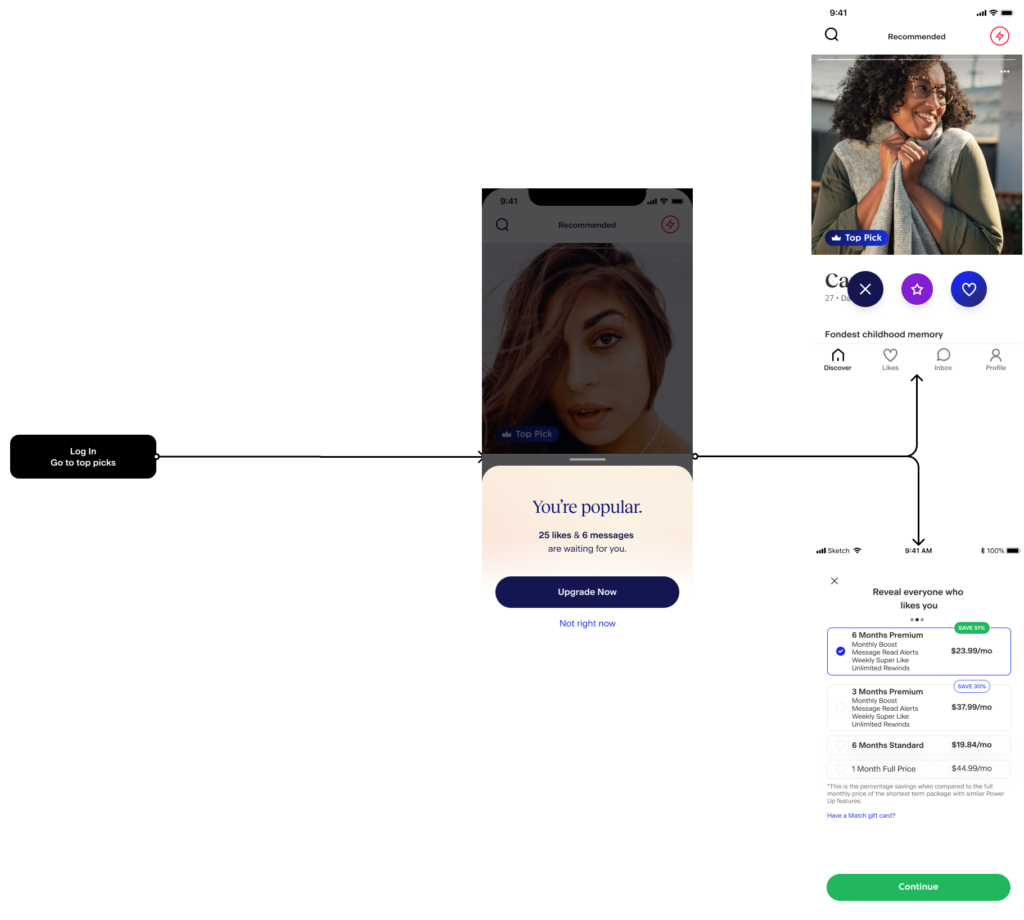
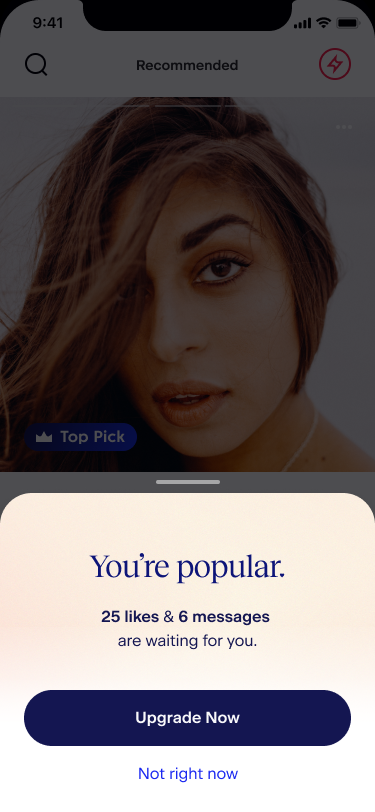
We landed on three different touch points that were both effective and less obtrusive. The first is a missed mutual nudge when you miss a match. The second is a celebratory drawer that shows the number of likes and matches you have. The third is a modal that asks you to buy after you finish your free picks. These happen on three different cadences to make sure we are not being intrusive.
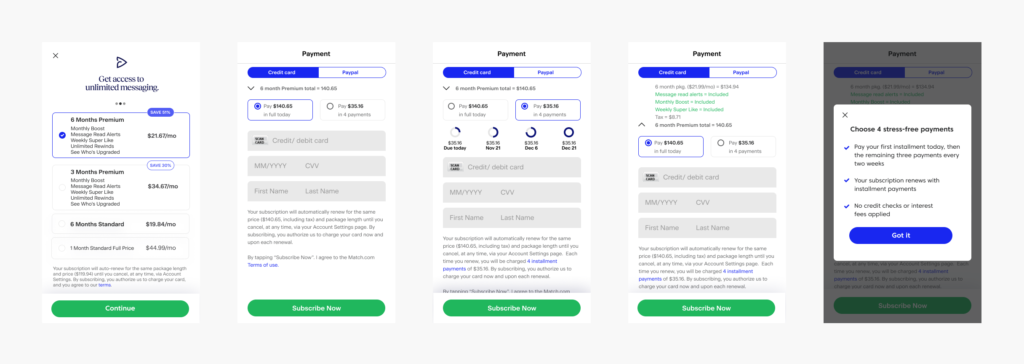
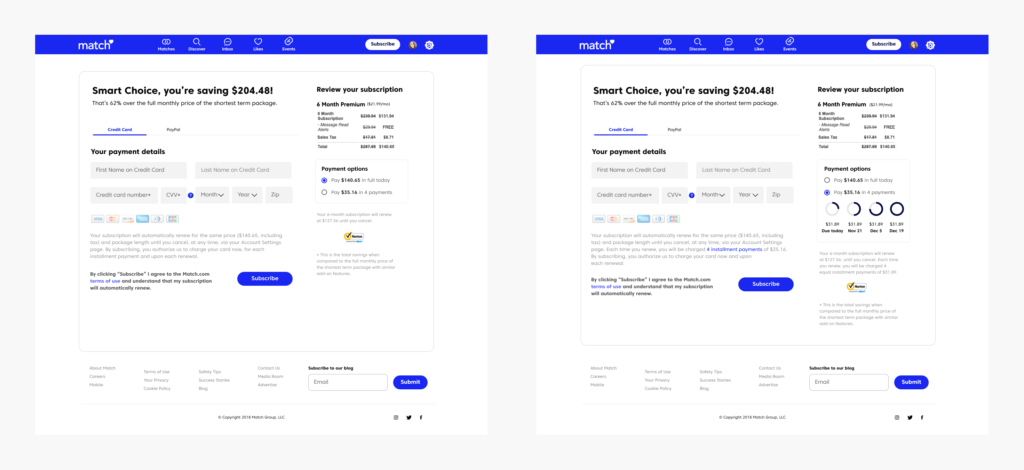
We wanted to be agile and work as fast as possible. My Product Manager and I had a brainstorming session and quickly drew up some wireframes and also looked at how other companies handle installment billing. We checked in with Dev to learn about our constraints. Unfortunately we can only do minimal changes to our existing billing page. However, we were able to update colors.
We implemented an installment billing system that allowed users to pay in biweekly installments. I worked within the development constraints to implement a design that clearly states when they will be charged.
This resulted in 21% of total subscribers & 40% premium subscribers choosing to pay in installments. 3% raise in conversion, 11% shift to premium.